
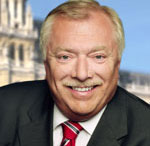
Dr Michael Häupl, Mayor of Vienna and 2004 World Mayor finalist for Europe

FRONT PAGE
About us

The 2010 results
The 2010 project
The 2010 finalists
Code of Ethics
The World Mayor Prize

The 2008 results
The 2008 project
The 2008 finalists
The World Mayor Award

The 2006 results
Methodology
The 2006 finalists
The World Mayor Award

The 2005 results
Contest methodology
List of finalists
The World Mayor Award

Mayor of Athens
Mayor of Guatemala City
Mayor of Mississauga
Mayor of San Fernando
Mayor of San Francisco

Mayor of Athens
Mayor of Guatemala City
Mayor of Mississauga
Mayor of San Fernando
Mayor of Vienna

Comments on finalists from The Americas
Comments on finalists from Europe
Comments on finalists from Asia, Australia and Africa
Comments on Addis Ababa
Comments on Antananariva
Comments on Athens
Comments on Atlanta
Comments on Belo Horizonte
Comments on Bonn
Comments on Guatemala City
Comments on Karachi
Comments on London
Comments on Melbourne
Comments on Mississauga
Comments on Rio de Janeiro
Comments on Rome
Comments on San Fernando
Comments on San Francisco
Comments on Toronto
Comments on Vancouver
Comments on Vienna

Mayor of Addis Ababa
Mayor of Antananarivo
Mayor of Athens
Mayor of Belo Horizonte
Mayor of Bonn
Mayor of Ekaterinburg
Mayor of Guatemala City
Mayor of Innsbruck
Mayor of Karachi
Mayor of Kiev
Mayor of Melbourne
Mayor of Mississauga
Mayor of Munich
Mayor of Rhodes
Mayor of Rome
Mayor of Tshwane
Mayor of Vienna

The 2004 contest
List of all 2004 finalists
Edi Rama wins 2004 award
People ask - Edi Rama replies
Why we voted for the Mayor of Tirana
Why we voted for the Mayor of Mexico City
History of Tirana

Front Page
Site Search
About City Mayors
The City of Vienna
At first glance, my credo might seem rather unsophisticated: my focus is on the future. One might reply that, naturally, the future happens tomorrow - it comes to pass on every new day. As Mayor of Vienna, that is exactly what I want to avoid: simply letting the future “happen”.
The key challenge of our time lies in perceiving, identifying, and responding to current trends and developments. City Mayors has asked me to define my primary goals for 2004. In a nutshell, my aim is to give the future a human shape.
In line with this mission, the City of Vienna is currently dedicating considerable funds to a comprehensive reform of nursing and care services for senior citizens and people in need of help. We are shifting the focus from large nursing homes to a range of smaller facilities and geriatric day-care centres throughout the city. We are further improving medical home care and nursing services in order to allow the elderly and vulnerable to stay in their familiar surroundings for as long as possible.
To pave the way for a dignified life in old age, we have launched a focus initiative to enhance training for nursing staff and we have also provided funding for multi-generation housing projects. Adaptations to existing nursing homes, and cooperating in projects with private developers, have served a similar purpose. After all, growing old in dignity is a fundamental issue affecting us all.
An ageing society, however, is only one of the momentous trends Vienna is currently facing. As the global economy undergoes profound changes, “intelligent industries” take on a special importance for the future of cities. Since I took office as Mayor and Governor of Vienna almost ten years ago, Vienna has successfully become a prime location for the establishment of research facilities and creative industries, especially those in the field of biotechnology and the life sciences. Subsidies for research institutes and support for the start-up of new institutes have attracted scientists of international renown, such as the quantum physicist Professor Anton Zeilinger, the immunologist Professor Josef Penninger and Intercell CEO Professor Alexander von Gabain. Their work, in turn, provides new jobs and professional development opportunities – in other words: a future for the people.
Since 1997, the City of Vienna has spent some EUR 350 million on technology initiatives. Moreover, it supports research initiatives of direct interest to the economy or labour market by issuing calls for projects, with panels of internationally renowned experts selecting the best submissions. In 2004 alone we are dedicating EUR 10 million to this special form of research promotion in addition to our regular technology budget.
As our location statistics show, these measures are already proving to be worthwhile. Some 300 international businesses have set up their co-ordination centres, for central and eastern Europe, in Vienna. One of the leading international biotechnology groups, Baxter, will be building its new biotech centre, for a staff of more than 2,000, here in Vienna. The American pharmaceuticals corporation Eli Lilly has decided to move its headquarters for eastern Europe to our city.
Vienna’s policy of actively promoting link-ups between academic and private sector research has likewise proven to be a success story. With about 8,000 businesses in the field of information and communications technologies, the Austrian capital is currently Europe’s third largest location in this sector. Only London and Munich have attracted more ICT firms – and we take that to be a challenge!
Apart from our two main priorities – the social focus on nursing and care for the elderly, and the economic focus on promoting research and job creation – the City of Vienna naturally has to serve the interests of the population and the environment in many other areas.
For instance, Vienna is about to set a new record in public transport development this year by simultaneously extending two of its five underground lines to the outskirts of the city. Public transport will thus become an even more attractive alternative to private motor traffic.
The Biosphere Park project has been launched to further enhance the protection of the Vienna Woods – the city’s “green lungs”. Housing rehabilitation and new construction projects must meet ecological requirements like heat insulation standards to be eligible for public subsidies in our city. With a stock of 220,000 public rented dwellings, the City of Vienna is itself the largest landlord in Europe. Vienna is therefore in the fortunate position of providing stability for the population with a housing allocation system founded on social criteria.
Setting strict standards in the construction industry ensures a sound basis for environmental protection. To be an ecologically model city is a key priority for Vienna. For years we have worked hard to remain true to this motto, and from my personal perspective as a biologist I regard the conservation of our environment as a genuine responsibility. This is something we owe to future generations. We must ensure that they, too, can look forward to a promising future at the heart of the new Europe. Especially in 2004, the year of EU enlargement, I see my role as a firm believer in the European cause in building bridges to our neighbours. I have joined forces with many of my colleagues to establish the Vienna Region as a single cultural and economic area in central Europe that reaches across national borders and thus promotes peace and understanding among the population.
This is the key to our future – for the future, after all, is where the main focus lies.

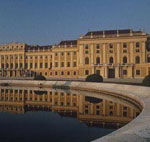
The Schönbrunn Imperial Palace
Introducing
World Mayor 2006
The World Mayor project is now in its third year. As in 2004 and 2005, this year’s World Mayor will again be seeking out mayors who have the vision, passion and skills to make their cities amazing places to live in, work in and visit. The World Mayor project aims to show what outstanding mayors can achieve and raise their profiles. It honours those who have served their communities well and who have made contributions to the well-being of cities nationally and internationally. The most outstanding mayor of 2006 will be presented with the World Mayor award.
In 2004, Edi Rama, Mayor of Tirana, won the Award. The 2005 winner was Dora Bakoyannis, Mayor of Athens and now Greek Foreign Minister.
Between January and May each year, citizens from across the world are invited to nominate mayors for the World Mayor Award. They are also asked to provide reasons for their choice. After the close of the nomination stage, City Mayors, the organisers of the contest, prepare a shortlist of mayors who go forward to the second round of the World Mayor contest. In 2006, the list of finalists includes 50 mayors from North and South America, Europe, Asia, Australasia as well as Africa.