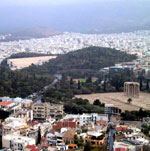
View of Athens from the Acropolis
(Photo: www.scott-applegate.com)

FRONT PAGE
About us

The 2010 results
The 2010 project
The 2010 finalists
Code of Ethics
The World Mayor Prize

The 2008 results
The 2008 project
The 2008 finalists
The World Mayor Award

The 2006 results
Methodology
The 2006 finalists
The World Mayor Award

The 2005 results
Contest methodology
List of finalists
The World Mayor Award

Mayor of Athens
Mayor of Guatemala City
Mayor of Mississauga
Mayor of San Fernando
Mayor of San Francisco

Mayor of Athens
Mayor of Guatemala City
Mayor of Mississauga
Mayor of San Fernando
Mayor of Vienna

Comments on finalists from The Americas
Comments on finalists from Europe
Comments on finalists from Asia, Australia and Africa
Comments on Addis Ababa
Comments on Antananariva
Comments on Athens
Comments on Atlanta
Comments on Belo Horizonte
Comments on Bonn
Comments on Guatemala City
Comments on Karachi
Comments on London
Comments on Melbourne
Comments on Mississauga
Comments on Rio de Janeiro
Comments on Rome
Comments on San Fernando
Comments on San Francisco
Comments on Toronto
Comments on Vancouver
Comments on Vienna

Mayor of Addis Ababa
Mayor of Antananarivo
Mayor of Athens
Mayor of Belo Horizonte
Mayor of Bonn
Mayor of Ekaterinburg
Mayor of Guatemala City
Mayor of Innsbruck
Mayor of Karachi
Mayor of Kiev
Mayor of Melbourne
Mayor of Mississauga
Mayor of Munich
Mayor of Rhodes
Mayor of Rome
Mayor of Tshwane
Mayor of Vienna

The 2004 contest
List of all 2004 finalists
Edi Rama wins 2004 award
People ask - Edi Rama replies
Why we voted for the Mayor of Tirana
Why we voted for the Mayor of Mexico City
History of Tirana

Front Page
Site Search
About City Mayors
The City of Athens
Dear Visitors to Athens
Dear Europeans
Dear Citizens of the World:
It is both a pleasure and an honour to contribute my thoughts to the task of directly serving citizens and grassroots democracy, through the office of Mayor and the process of local government.
Mayor Bakoyannis won the 2005 World Mayor Award
For this process is, indeed, the application of ‘direct democracy’. It is the duty of serving the citizens in the common search for solutions and for a better daily life at city, community and neighbourhood level.
I feel fortunate, yet challenged in this position, in this particular year and at this particularly historic time. For my efforts, and those of my associates, are focused on the growing expectations of our citizens, our growing number of immigrant residents, and our millions of visitors - tourists or otherwise.
These pressures are heightened by the fact that our administration has been elected amid a number of critical developments - local and international. For example, our ancient city - known as ‘the cradle of democracy’ or as ‘the historic capital of Europe’ because of its decisive contribution to world civilization and democracy - is in the middle of preparing the largest organised event in the world: the 2004 Olympic Games.
On a personal level, I have also found myself in the challenging position of being the first woman in 3,000 years to be elected to serve the local government of this city, and the first woman to head any city that has hosted the Olympic Games. On this aspect, my hope is that this will help the cause of women throughout the world, not just in Greece.
Similarly, Athens finds itself in the midst of the expansion of the European Union from 15 to 25 full members, thereby placing it geographically closer to the heart of the New Europe, on the crossroads between eastern and western Europe and the Mediterranean. This, automatically, has added to the city’s international significance in business, diplomacy, travel, tourism and culture.
Furthermore, the city’s enhanced geographic importance makes Athens attractive for millions of economic migrants seeking a better life in the developed world. Therefore, in 2004 we are extending our resources even more to face this demand and to assimilate an ever-growing, large number of ethnic groups from eastern Europe, Africa and Asia. And, if I may say so, this process of integration is taking place successfully and peacefully.
As a result of these overlapping pressures and challenges, our programme so far this year-- one that will continue after the August Olympics - features among other things:
An extensive improvement of infrastructures to make the city more user-friendly for its millions of residents and visitors; new facilities to make it accessible for people with disabilities; extensive social programmes for the needy and elderly; the largest ever programme in Athens for public cleanliness, accompanied by stiff penalties for those responsible for littering; the planting of tens of thousands of trees and bushes and half a million flower plants to radically improve the city’s former lack of sufficient greenery; the first-ever financed action programme to take care of stray animals; a fivefold increase in our city’s police force to deal with ‘social misconduct’ such as driving and parking violations; developing large new parking facilities and removing old, abandoned vehicles; programmes for the repair and repainting of building facades, for the improvement and protection of museums and monuments; better public lighting on streets and highways; more sports and childcare facilities; and major public transport infrastructure projects – in cooperation with the relevant government ministries – such as the expansion of our top-quality new metro, an electricity-powered, environment-friendly tramway network, an extensive new network of highways and ring-roads, and a suburban railway linking the international airport with the city.
The list is longer, but may I conclude with one particular project which is perhaps unique worldwide: the Unification of Archaeological Sites, a 16 kilometre (10 miles) long pedestrian link or ‘walk through time’ between the city’s main archaeological and more recent historic sites. It is an ‘Archaeological Park’, a living museum, spanning stadiums, temples and monuments from as far back as 3,000 BC, but also reaching up to the fifth to the fifteenth century Byzantine, and to the nineteenth century neoclassical eras.
These are some of our accomplished tasks and continuing projects in the Olympic City of Athens, for 2004 and beyond. The task is to balance the protection of Athens’ unique ancient heritage, which in effect belongs to the whole world, with the provision of state-of-the art facilities to stage the Olympic Games – and then, to promote this ancient and modern world legacy for the sake of future generations.
For, as Mayor of Athens, I must never forget that while people might glorify in the past, they nevertheless live in the present and have high expectations for the future.
Profile of Dora Bakoyannis

Dora Bakoyanni, Mayor of Athens and winner of World Mayor 2005
Introducing
World Mayor 2006
The World Mayor project is now in its third year. As in 2004 and 2005, this year’s World Mayor will again be seeking out mayors who have the vision, passion and skills to make their cities amazing places to live in, work in and visit. The World Mayor project aims to show what outstanding mayors can achieve and raise their profiles. It honours those who have served their communities well and who have made contributions to the well-being of cities nationally and internationally. The most outstanding mayor of 2006 will be presented with the World Mayor award.
In 2004, Edi Rama, Mayor of Tirana, won the Award. The 2005 winner was Dora Bakoyannis, Mayor of Athens and now Greek Foreign Minister.
Between January and May each year, citizens from across the world are invited to nominate mayors for the World Mayor Award. They are also asked to provide reasons for their choice. After the close of the nomination stage, City Mayors, the organisers of the contest, prepare a shortlist of mayors who go forward to the second round of the World Mayor contest. In 2006, the list of finalists includes 50 mayors from North and South America, Europe, Asia, Australasia as well as Africa.